Before the Headliner: Six Support Slots That Turned Into Coronations
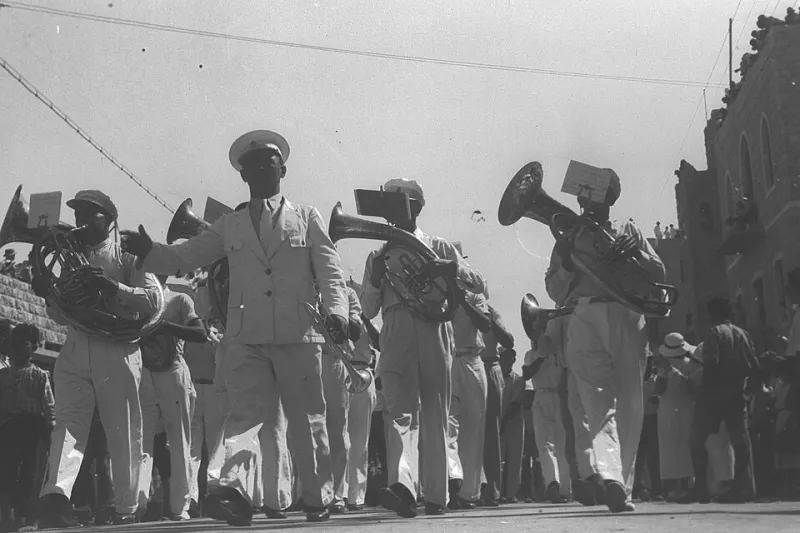
Photo: Zoltan Kluger, Public domain, via Wikimedia Commons
The support slot is a brutal little institution. Thirty minutes, a fraction of the PA, a lighting rig pointed at somebody else, and an audience who have mostly come to stand near the bar and shout at each other. Get it right and you leave with three hundred new people who will tell a friend. Get it wrong and you are background noise with a strap.
A few opening acts have done more than survive it. These are the nights where the support band took the room and did not give it back.
1. Queen, opening for Mott the Hoople (1974)
Mott were the glam-era band with the cult following and the good songs, and they took Queen out across Britain at the back end of 1974 with what looked, on paper, like a mismatch. Queen turned up with a guitarist playing a guitar he had built himself at home with his dad, into amps cranked to a volume that suggested a headliner's ego.
The moment: the frontman at the piano for a long, theatrical ballad, then the guitarist stepping forward and dragging the whole thing into a hard-rock middle section that nobody in the hall had been warned about. By the end of the tour, the support act were being asked back for encores, which is roughly the politest way a support band can ruin a headliner's evening. Within eighteen months they were playing arenas themselves.
2. The Clash, opening for the Sex Pistols at Screen on the Green (1976)
Islington, a cinema, and a bill that has been cited in more books than any other night of British punk. The headliners had the reputation. The support act had a guitarist with a chip on his shoulder and a Les Paul that sounded like it had been dragged behind a van.
The moment: the tempo never dropped, the solos were barely solos at all, and the whole thing felt less like a set and more like an argument being won in public. Punk's wardrobe got the column inches; the guitar sound that night is what actually got copied in rehearsal rooms across the country.
3. Nirvana, opening for Tad on their first UK dates (1989)
Barely anyone in the building knew the band. The headliners were the bigger, heavier, more established act, on a run of British shows that sold modestly and were talked about afterwards by roughly nine thousand people, none of whom could possibly all have been in a room that held two hundred.
The moment: a guitar tone that sounded wrong for the venue in a way that turned out to be exactly right, and a set that leaned on volume rather than material. The crowd came for one thing and left arguing about the other, which is the whole job.
4. Oasis, opening for The Verve (1993)
A support slot on a tour by a band with a serious following and a frontman with a serious presence, at exactly the point where the opening act had songs and absolutely no money. Borrowed gear, borrowed swagger, and a singer standing far enough back from the mic to look like he did not care whether anyone was listening.
The moment: the guitarist's simple, chiming introduction to a song that was not yet famous, played with the confidence of a band who had already decided how this was going to end. Half the room went to the merch desk to find out there was nothing to buy.
5. Muse, opening for Skunk Anansie (1999)
A three-piece from Devon with a singer who played guitar like it was a fight, on tour with a headline act with a huge voice and a huge crowd. Nobody had figured out yet whether this band were a rock band, a prog band, or a science experiment.
The moment: the frontman abandoning his guitar mid-song for a keyboard and then returning to it for a riff so distorted and so tightly controlled that the pit stopped moving and just watched. Support slots are supposed to be a warm-up. This one was a demonstration.
6. The opener at a two-hundred-capacity room, somewhere in Britain, this year
Walk into almost any club show on the 2026 circuit and you will see it: a local three-piece with one pedalboard, no backdrop, and a singer who thanks the headliner twice in thirty seconds. And every few weeks, one of them takes the room.
This year it looks like a wall of delay and a single long note held until the crowd stops talking. No barrier, no gap between band and audience, no lighting cue to tell anyone the good bit is coming. The result is a support set where the headliner walks on to a room that has already used up its cheering, and the opener spends the interval being asked where they are playing next. That is how it has always worked, and it is still the cheapest education in rock and roll.