The Setlists That Never Started: Why Britain’s Cancelled Gigs Refuse to Fade
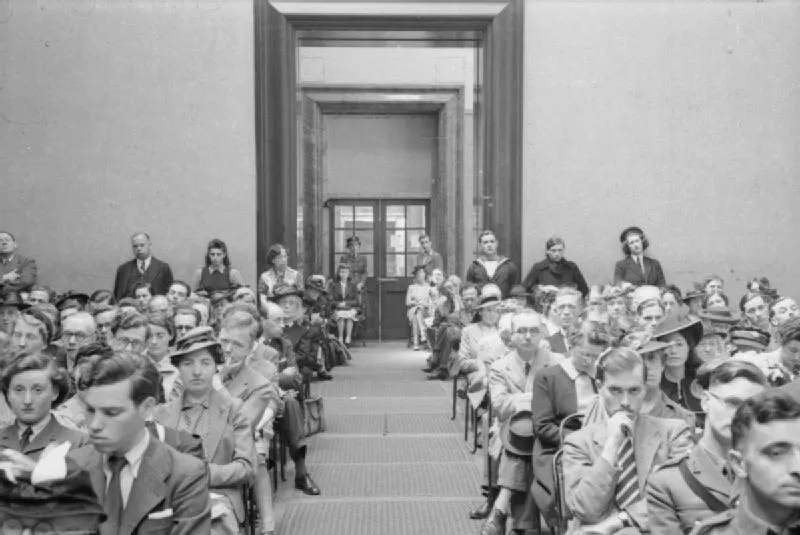
Photo: Ministry of Information Photo Division Photographer, Public domain, via Wikimedia Commons
Every UK music city has a ghost gig. Not a bad night, not a half-empty Tuesday in a room above a pub — a show that never happened at all. The tickets were printed. The support was booked. Someone had already learned the setlist. And then the whole thing slid into folklore.
You will hear these stories in pubs, at merch desks and in the queue for the toilets at festivals. The details change. The ticket price gets cheaper, the venue gets smaller, the support slot gets more legendary. But the shape is always the same: a night that was almost real, and therefore never had to be disappointing.
The Punk All-Dayer That Met the Council
Picture a function room with a low ceiling, a borrowed PA and a bill of bands who all claimed they were going to be the next big thing. The flyer was photocopied. The door was cash-only. The council arrived before the first chorus and shut it down on a technicality that nobody can quite agree on.
The legend is not the noise. It is the paperwork. The all-dayer became a story about how British live music has always had to negotiate with licensing, neighbours and the fear of something getting out of hand. In 2026, that tension has not gone away. It has just moved into different rooms.
The Stadium Support That Died on the M6
This is the one that gets told with motorway details. The headliner’s gear truck broke down on the M6. The support band were already at the stadium, already soundchecked, already staring at a stage that was not going to be used. The show was pulled, the crowd was sent home, and the support slot became the greatest gig that nobody saw.
What makes it linger is the contrast. Stadium shows are supposed to be the reliable end of the business: big trucks, big crews, big margins. Then a single mechanical failure reminds everyone that live music is a chain of vans, cables and human timing. One link snaps, and the whole night disappears.
The Secret Club Show and the Burst Pipe
Secret shows are built on anticipation. Word of mouth does the advertising. The venue is small enough to feel like a secret. Then a pipe bursts in the ceiling, the floor turns into a paddling pool, and the gig is cancelled before the first support band can plug in.
The story survives because it is so absurd. It is not a rock-star cancellation. It is British infrastructure doing what British infrastructure does. The people who swear they had a ticket are not lying, exactly. They are remembering the feeling of almost being there, which is often stronger than the memory of actually being there.
The Weather Always Wins
British weather has killed more outdoor gigs than any promoter would like to admit. The stage is built, the barriers are up, the crowd is in ponchos, and then the wind gets up or the rain comes sideways. Safety wins. It always has to. But the cancellation leaves a strange hole in the summer.
The weather is the perfect villain because nobody can argue with it. You cannot blame a band, a council or a ticket agency. You can only stand in a field, look at a covered stage, and accept that the British sky has headlined the night instead.
The Farewell Show That Never Left the Lay-by
There is always a farewell show that was meant to be the last one. The van was packed. The setlist was taped to the amp. Then the van did not start, the replacement van did not arrive, and the farewell became a group chat instead of a gig.
These are the cancellations that hurt in a quieter way. They are not legendary because of a riot or a storm. They are legendary because they mark the end of something, and the end got postponed indefinitely. The band may have played other shows. The farewell may have happened later. But the one in the story is the one that did not.
Why We Keep the Tickets
A cancelled gig is pure potential. It has no bad sound, no drunk heckler, no muddy field and no support band you missed because the queue was too long. It exists only as an idea, and ideas are very hard to ruin.
That is why people still swear they had a ticket. They are not just remembering a night out. They are remembering the version of the night that lived in their head — the one where the band were perfect, the crowd was electric and the last train home was somehow not a problem.
It also says something about how fragile UK live music still is. A van, a pipe, a licence, a forecast. The whole thing runs on margins that are thinner than they look from the barrier. The cancelled gig is a reminder that a show is not a product on a shelf. It is an event that has to be assembled, night after night, by people who are often doing it on a shoestring.
The Ghost Setlist
The gigs that never were do not fade because they never had to compete with reality. They are the ghost setlists of British music: the punk all-dayer, the stadium support, the secret club show, the weather-beaten festival and the farewell in a lay-by. In 2026, we still talk about them because they remind us what live music feels like before the first chord — fragile, unlikely and worth the wait.