The Hiss Between the Notes: Why Britain's Bootlegs Outlast the Official Live Album
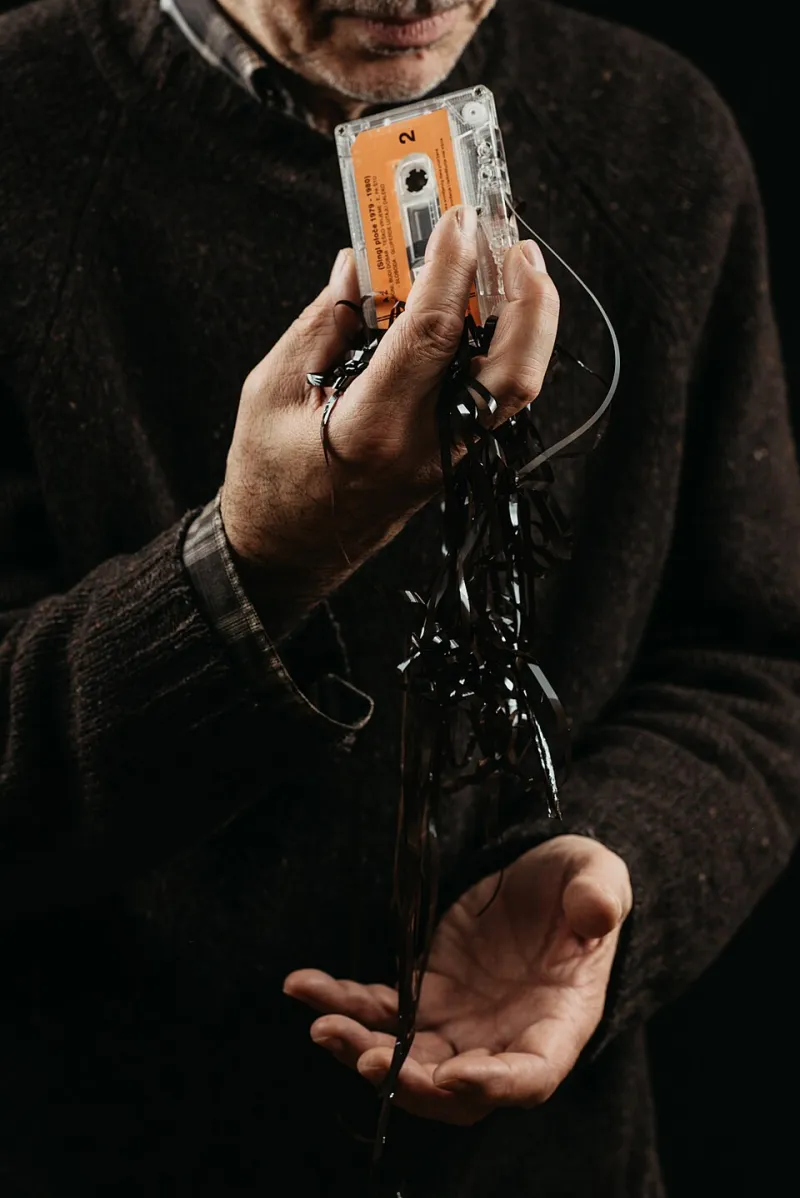
Photo: Shixart1985, CC BY 2.0, via Wikimedia Commons
Every serious gig collection has one. A tape that sounds like it was recorded from inside a carrier bag, where the snare is a wet slap, the bass is a rumble from two rooms away, and the between-song banter arrives a full three seconds before the applause it prompted. And yet it gets played more often than the glossy live album the band put out five years later with the artwork and the deluxe reissue.
That is the strange arithmetic of the bootleg. The official live record is a product. The tape is a witness.
The lad at the back with a C90
British taper culture grew out of nothing more exotic than thrift and stubbornness. A TDK SA90 cost about a pound, a Maxell C90 a little more, and a coat draped over your hands could hide a microphone well enough to get past most door staff in 1983. The recording itself was a compromise: automatic gain control flattening every crescendo, the room's PA fighting a stack of backline that was never meant to be balanced for anything but the first six rows.
What made it a culture rather than a hobby was the code. You did not sell. You traded. You kept a list, you posted it, you waited for a padded envelope. The classifieds at the back of the music papers were the original search engine, and the etiquette was strict enough to be dull: credit the taper, never downgrade a copy, never pass off a second-generation tape as a master. Blokes who broke the rules found themselves quietly off the list.
What the desk never caught
The thing people misunderstand about live albums is how little of the night survives in them. Multitrack recordings are cleaned, comped, tuned, and occasionally have whole guitar parts replaced in a studio weeks later. What you get is the performance as the band wished it had gone.
An audience tape gives you the performance as it happened, including the messy bit that made the night worth remembering. The amp humming during the quiet number. The guitar drifting sharp before a solo because the room was too hot. The moment where a band who had no right to be this good in a room this small found a groove that never turned up again on any studio take, because they were never in that mood again.
That is why guitar players obsess over bootlegs. The famous recorded solo is the one that got signed off. The bootleg solo is the one that got away with something.
The ones that got away
For every tape that survived, a shoebox of others went to the tip. The losses are almost always the same story: the only copy got taped over for a Sunday chart show, the cassette got left on a car dashboard through a summer, the lad who recorded it moved house and never mentioned it again.
The gaps are worst around the small stuff. Support slots. Pub back rooms. A band's fourth-ever gig in front of forty people, three of whom are now the only source for a story repeated in every interview the singer has given since. If a band split after eighteen months and never got a live document, the archive of that band is whatever a fan happened to keep. There is no institution coming to save it. There never was.
From the coat pocket to the thumbnail
The technology moved on and the habits moved with it: cassette decks to Walkmans with fixed gain, then DAT, then minidisc, then the first camera phones that recorded sound like a wasp in a jar. Now, in 2026, every person in the room is holding a 4K recorder with a decent stereo pair of microphones, and somehow the archive has got thinner.
Forty-second vertical clips of the chorus. No full sets. No taper's notes, no lineage, no idea who filmed it or whether the audio has been run through three filters before it reached your feed. Footage that vanishes when an account goes quiet. Strict door policies at some venues, a shrug at others, and a growing number of artists who publish a taper-friendly policy because they have finally clocked that the fans doing the recording are the ones keeping the back catalogue alive.
The code hasn't really changed
The ethics are older than the format. Do not sell it. Do not block the view of people who paid to be there. Do not spoil the gig for the people standing next to you. Share it widely, credit the person who stood still for ninety minutes with their arms by their sides, and accept that the hi-hat will sound like cutlery and that this is not the point.
Because the point is that the hiss is evidence. Somewhere in a box in a spare room in Britain there is a tape of a Tuesday night that nobody filmed, and on it a guitarist takes a solo somewhere unexpected and gets away with it. That is why people still argue about it in 2026, and why it survived at all. Somebody, once, had the wherewithal to press record.