Feedback, Fumbles and Fortune: The Accidental Riffs That Built British Rock
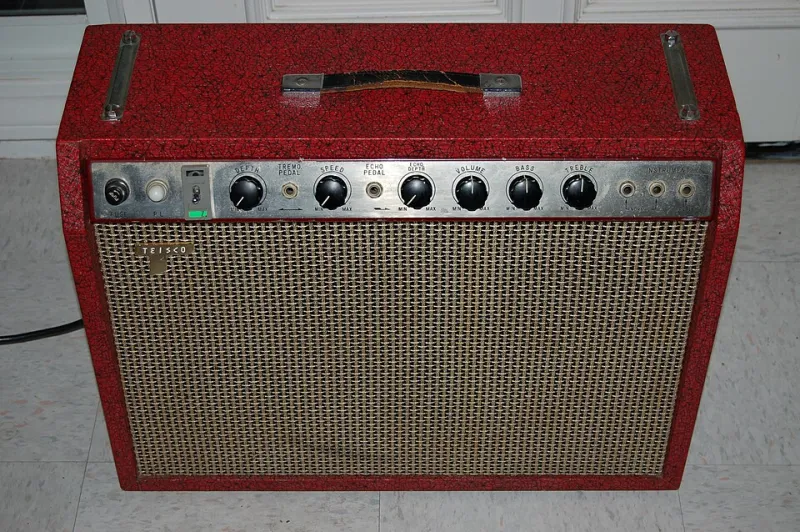
Photo: Ian Abbott from Santa Clara, California, USA, CC BY-SA 2.0, via Wikimedia Commons
There is a story the gear adverts like to tell. Buy the right valve amp, the right germanium fuzz, the right cable with the braided sleeve, and the tone is yours. In 2026 you can model an entire Abbey Road signal chain on a laptop before breakfast, print it to a grid-perfect session file, then pay a monthly subscription to make it sound as though it was recorded badly in 1967. And yet the riffs that still get hummed at bus stops were, more often than not, the product of something going wrong at precisely the right moment. A snapped string. A slashed cone. A fingertip left on a factory floor in the West Midlands. Britain's greatest guitar moments are, to a remarkable degree, a catalogue of accidents that nobody had the sense to undo.
The Feedback Nobody Meant to Record
October 1964, Abbey Road, Studio Two. The Beatles were working through I Feel Fine when John Lennon rested his semi-acoustic against a vibrating amp and the room filled with a howl. The tale has been told both ways ever since: as a tape that happened to be running, and as a trick the band then spent an afternoon trying to recreate on purpose. Either version ends the same way. The drone stayed in, and by November it was sitting at number one.
Feedback had been a fault before it was a feature. Engineers spent the fifties fighting it with baffles and distance and dirty looks. Four lads from Liverpool let it open a single, and British guitar music spent the next decade working out how much of it they could get away with. The Who turned it into a rhythm instrument. Hendrix made it sound like weather. None of it would have happened if someone had simply turned the amp down.
A Factory Floor in Birmingham and the Invention of Heavy Metal
Tony Iommi was a teenager working in a sheet metal factory when a machine took the tips from two of his fingers. He was told, in the way people told you things then, that he might as well sell the guitar. Instead he fashioned homemade thimbles from melted washing-up liquid bottles, strung his instrument with something closer to elastic than wire, and slackened the tuning so that bending strings did not hurt.
That slackness is the whole story. Dropped down towards C sharp, the guitar stopped sounding like a guitar and started sounding like a warning. Every doom record, every drop-D chug, every band currently selling out the Academy with a wall of amps and a single tempo traces back to a shop-floor accident in Birmingham and a young man too stubborn to take the advice. Heavy metal was not designed. It was adapted to.
The Razor Blade in the Speaker Cone
In 1964, the Kinks needed a guitar sound that matched the aggression of a song about wanting something you are not supposed to have. Dave Davies has told the story of taking a razor blade to his amp's speaker cone more than once, and like all the best stories it has grown a little in the telling. Some engineers insist the fuzz came from a pedal, or from an overdriven desk, or from the simple fact that the amp was cheap and being asked to do something unreasonable.
It barely matters. You Really Got Me sounds like a machine being deliberately annoyed, and that is why it still works. The riff is three chords and a bad attitude, and the texture around it is the sound of equipment being pushed past the point where the manual becomes relevant. Precision had nothing to do with it.
The Fuzz Box That Was Only Supposed to Be a Placeholder
Flip the Atlantic and you get the other great accidental riff of the decade. Keith Richards has said the riff for (I Can't Get No) Satisfaction arrived in a dream, and that the fuzz box he tracked it through was intended as a stand-in until the horns came in. The horns never came. The fuzz stayed, and a demo sketch became the record that broke America.
That is the pattern, and it repeats. The mistake is not corrected because everyone in the room is too busy, too broke or too excited to correct it. The temporary fix becomes the sound. Somebody in 2026 will read this and think about the scratch guitar part they muted last week, and they should.
Overload, Dropped Tunings and Other Things the Manual Warns About
The same spirit runs through Revolution, where the console itself was driven into distortion because the guitars were not quite filthy enough. Through Helter Skelter and its glorious, sloppy racket. Through The Who's Anyway, Anyhow, Anywhere, which is essentially two minutes of a band arguing with their own amplifiers. Through the punk records made on borrowed gear that nobody had serviced since the previous decade.
None of these people were sloppy. They were listening, and when something interesting fell out of the speakers, they had the nerve to keep it. That is a discipline of its own, and it is harder than it looks.
Why You Cannot Buy a Happy Accident
The uncomfortable truth for 2026's tone-chasers is that the thing they are hunting is not a tone at all. It is an event. Amp modellers, profiling rigs, boutique stompboxes and the endless reissue arms race can give you the sound of a broken amp, but they cannot give you the moment the amp broke, because the whole value of that moment is that it cannot be repeated.
Recall is the enemy of the accident. When a session can be loaded, tweaked and reloaded from three different studios, when the click is locked and every take is comped, the incentive to leave a strange noise in the mix quietly disappears. Reliability is not a crime against music. But it does mean that fewer records now contain anything that could not have been planned.
And there is a commercial problem too. Nothing accidental can be sold back to you as a preset, which is precisely why the industry prefers the chase. The perfect tone is a subscription. The lucky error is a memory.
Leave the Mistake In
So here is the advice, free of charge, for anyone plugging in this weekend. Record everything, including the bits that sound wrong. Do not fix the good part. If the string snaps in the middle of the take, listen back before you reach for the retake. The broken string might be the song.
Britain's best riffs were never designed. They were survived. And the next one is probably hiding in whatever you were about to delete.