Pennies, Plectrums and the Front Row: A Small History of the Guitar Pick
There is a particular kind of plastic that outlives the gig. It is not the setlist, which goes soggy in a back pocket. It is not the wristband, which snaps before the bus home. It is the guitar pick: a small, cheap, easily lost object that becomes strangely precious the moment it is flicked into a crowd. In a drawer somewhere in Britain, there is probably a plectrum from a night someone still talks about. It might be a Tortex with the logo worn away, a Herco with a bite mark in it, or a no-name bit of celluloid that cost less than a bag of chips.
That is the odd bargain of the guitar pick. It is disposable by design and sentimental by accident. On the merch table it is an afterthought; in the front row it is a trophy. And because it is small enough to keep and tough enough to survive, it has become one of the few genuine relics of British gig-going that fans can actually own.
The humblest tool in the chain
Guitars get the mythology. Amps get the arguments. Pedals get the forums. Picks get forgotten until someone needs one and the whole band goes quiet. Every guitarist has known the mild panic of patting down pockets before a set, asking the support band if they have a spare, or accepting a flimsy freebie from a guitar shop jar with the enthusiasm of a man accepting a parking ticket.
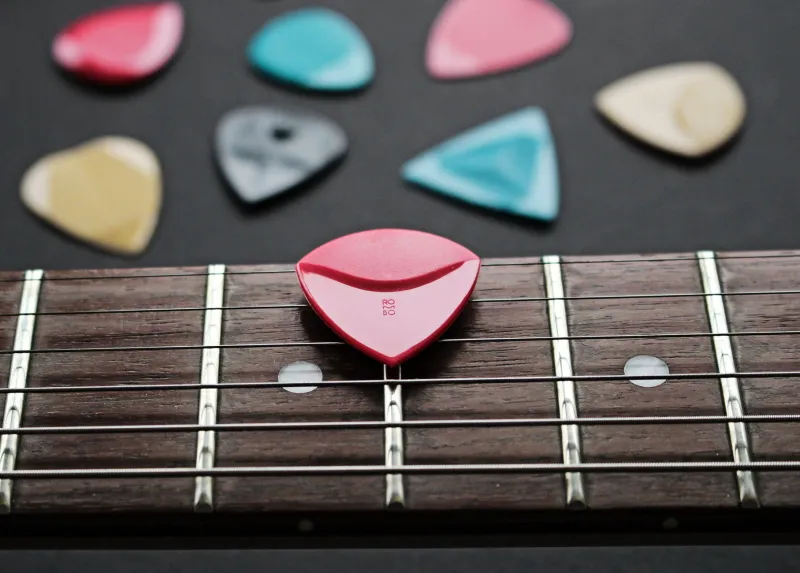
Yet the pick shapes the sound more than its price suggests. A heavy Tortex gives rhythm playing a blunt, determined thump. A thinner celluloid pick snaps and slurs around chords. A small jazz-style plectrum changes the angle of attack and makes lead lines feel tighter. Players develop loyalties the way other people develop them to tea bags. Some swear by Herco nylon picks for grip and flex. Others will not touch anything but a standard Fender medium. Brian May famously went his own way with a sixpence coin, which is its own small act of British eccentricity: why use a plectrum when the change from a pint will do?
Those preferences are not trivial. They are part of the playing. The pick is where the hand meets the string, and the wear on an old one reads like a tiny record of how someone played. A rounded tip suggests lots of strumming. A scalloped edge suggests heavy rhythm. A pick worn almost to a nub tells you the owner did not believe in replacing things until they were legally dead.
The ritual of the flick
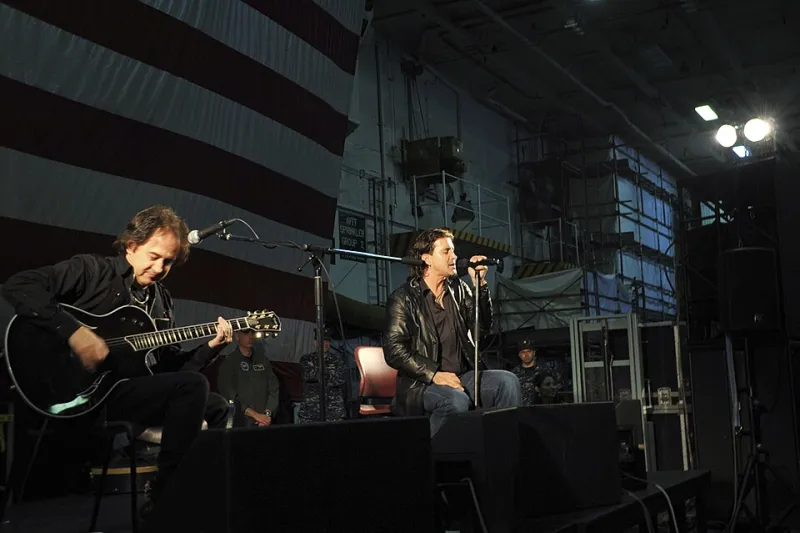
A pick only becomes a relic when it leaves the stage. Until then it is just equipment. The flick into the crowd is a small ritual that turns a bit of plastic into a story. Sometimes it is deliberate: the guitarist finishes a song, peels the pick from thumb and forefinger, and sends it spinning into the dark. Sometimes it is accidental: a pick slips mid-solo, pings off a monitor, and lands at the feet of someone who will treasure it forever. Either way, the object changes category. It stops being a tool and becomes a token.
The front row has always been an archaeological site. Setlists, drumsticks, water bottles, the occasional towel — all of it gets grabbed, folded, and taken home. But picks are special because they are small enough to keep in a wallet and robust enough to survive a wash. They do not fade like ticket stubs. They do not crumble like old wristbands. They sit in tins and film canisters and jewellery boxes, quietly outlasting the venue, the band, and sometimes the person who caught them.
Dropped picks are their own subgenre of gig disaster. There is the classic mid-song fumble, where the guitarist tries to retrieve a spare from the mic stand while still playing. There is the taped-on-pick arrangement, a strip of gaffer tape holding half a dozen spares within reach, which looks practical until the tape gives up and the picks rain onto the stage. There is the moment of pure panic when a player realises the spare picks are in the case, the case is backstage, and the solo is now. Audiences notice. They always notice.
What the wear marks say
A pick collection is a folk archive. Not a museum one — no glass cases, no labels — but a personal one. Fans can tell you where each one came from: the small venue in 1996, the festival where it rained, the night the guitarist threw it into the crowd and it hit someone in the eye. The stories grow around the object. The object itself is almost irrelevant, except that it is not. It is proof.
In 2026, the pick is still cheap, still easy to lose, and still the most democratic piece of guitar culture going. Independent guitar shops sell them from jars by the counter. Online retailers sell them in packs of twelve. Bands print their logos on them and watch them disappear. And somewhere, in a drawer in Leeds or Cardiff or Glasgow, there is a worn-down plectrum that once belonged to someone who played a riff that mattered. It cost fifty pence, maybe less. It is priceless anyway.