The Loaner's Code: How Britain's Greatest Riffs Survived on Borrowed Wood
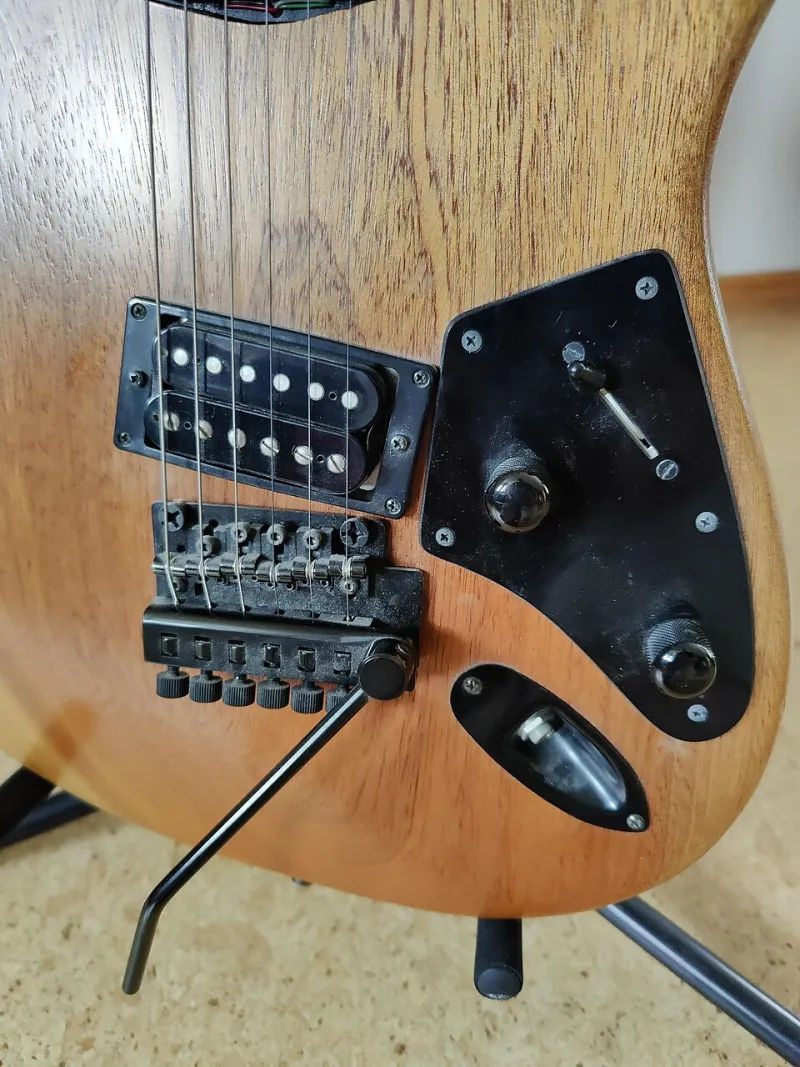
Photo: Elmschrat, CC BY-SA 4.0, via Wikimedia Commons
Every guitarist in Britain has been there. You're in the back room of a pub, the headliner's gear is stacked by the fire exit, and someone says the words that have launched a thousand riffs: 'Just use mine.' The guitar is not yours. The strap is too short. The action is wrong. The strings are older than the setlist. And yet, for one song, it becomes the most important instrument in the room.
That moment is not a footnote in British guitar history. It is closer to a founding principle. For all the glossy gear worship and the endless chat about tonewoods, the truth is that a lot of iconic British guitar moments happened because someone lent someone else a guitar. The loan might have lasted a night, a session, a tour or a decade. The receipt was rarely part of the deal.
The First Rule: The Guitar Is Never the Whole Story
Take the most famous example of a guitar passing between British players: the Fender Telecaster that Jeff Beck handed to Jimmy Page. Call it a gift, a long-term loan or a hand-me-down between friends — the paperwork was never the point. Page used that Telecaster during the early Led Zeppelin sessions, and the brittle, biting snap of it became part of the band's early recorded DNA. It was not a custom-shop showpiece. It was a working guitar that had already belonged to someone else.
The story appeals because it punctures the myth of the solitary genius and his sacred axe. British rock was built on a second-hand economy: borrowed amps, part-exchanged guitars, gear that did the rounds of rehearsal rooms and bedrooms. The borrowed guitar is simply the most intimate version of that economy. You are not just using someone's instrument. You are using their setup, their history and their trust.
The Myth of the Magic Loaner
There is a persistent idea that borrowed guitars carry a kind of magic. The loaner becomes legendary: the Les Paul that went round a Manchester rehearsal room, the Strat that saved a Britpop session, the acoustic that turned up at a folk club and was never quite given back. These stories grow because guitarists are storytellers, and because a borrowed guitar gives a song a ready-made origin myth.
But the magic is usually not in the wood. It is in the pressure. A borrowed guitar forces you to adapt. You cannot fall back on the neck you know or the pickup setting you always use. You have to listen. Some players sound more like themselves when they are slightly uncomfortable. The loaner strips away the comfort blanket and leaves the riff exposed.
That is also why the myth can be unhelpful. A famous riff played on a borrowed guitar does not prove that the guitar made the riff. It proves that the player could make the riff under unfamiliar conditions. The borrowed instrument is a witness, not a author. The hands still did the work.
The Etiquette of the Handover
Lending a guitar is an act of faith, and British guitar culture has developed an unwritten code around it. The first rule is simple: ask, do not assume. The second is just as important: do not adjust anything you do not understand. A quick tweak of the truss rod or a fiddled-with bridge can turn a friendly loan into a quiet feud that lasts longer than the band.
Then there is the question of return. The guitar should come back in the state it left — or better, with a fresh set of strings if a string was broken. Do not return it with a new sticker, a new strap or a new smell of pub carpet. If you borrowed it for a gig, offer to cover the cost of a setup. If you borrowed it for a session, buy the owner a pint and tell them exactly what it played on. The story is part of the payment.
There is also the rule that every guitarist learns the hard way: never lend an instrument you cannot afford to lose. Not because your friends are thieves, but because life happens. Vans get broken into. Floors get wet. Headstocks meet doorframes. The loaner is a risk, and the code exists to keep the risk friendly.
Studio Emergencies and the Lock-In Loan
Some of the most important borrowed-guitar moments never make it to the stage. They happen in studios at two in the morning, when a part is not working and someone's mate has a guitar in the car. The session player borrows a different instrument for a different colour. The producer lends his own guitar because it has the right pickup. The guitar shop stays open late because the band is on the clock and the clock is winning.
In 2026, the same ritual continues, even if the gear is more expensive and the insurance is more complicated. The loan might be arranged through a group chat rather than a landline, but the logic is unchanged: the right guitar is often the one that is already in the room. British guitar culture has always been practical. We like the romance of the vintage instrument, but we also like getting the take finished before the tea goes cold.
What the Borrowed Guitar Leaves Behind
The borrowed guitar matters because it shows that British guitar history is collaborative. It is not just a parade of lone heroes and their perfect gear. It is a network of mates, mentors, shopkeepers and session players who kept the music moving by passing instruments across the room.
So the next time you hear a riff that sounds like it was played on a guitar that did not belong to the person playing it, do not treat it as a trivia footnote. Treat it as a reminder. The guitar is never just a guitar. It is a favour, a risk, a story and a loan. And in Britain, some of the best riffs have been played on borrowed wood.